
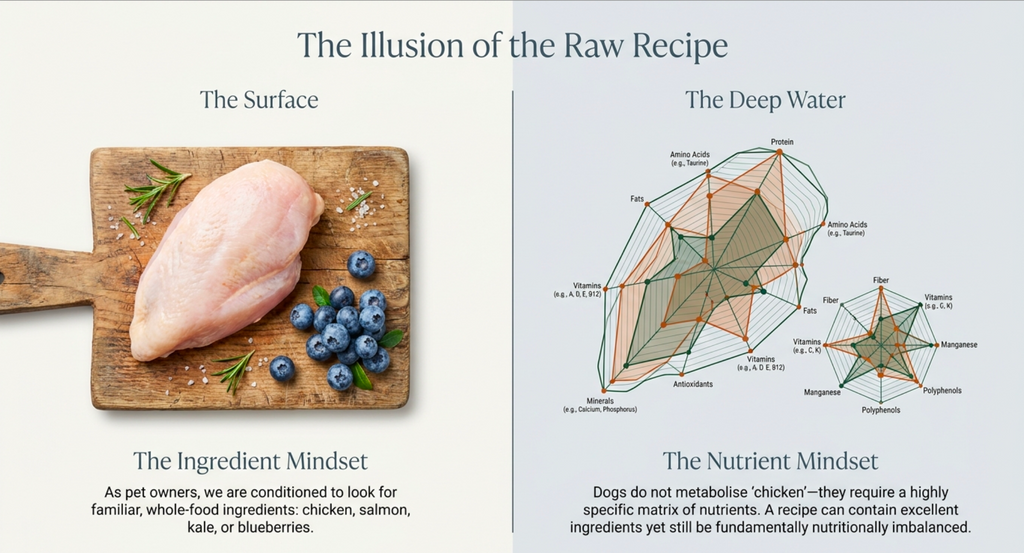
Think about an Ice Berg, on a boat, we can only see the layer of ice on top of the water, however we know it goes much deeper than that, ask my friend the Titanic 🐶

When choosing fresh dog food, many pet owners focus on the ingredient list (top of the ice berg). They look for real meat, vegetables, and wholesome foods like pumpkin, carrots, or blueberries. While these ingredients are important, they are only part of what makes a healthy diet.
What truly matters is down to the micro nutrient level (the ice below the water) whether the food provides the right balance of nutrients your dog needs every day.
This is where a board-certified veterinary nutritionist plays an important role.
Definition: A board-certified veterinary nutritionist is a veterinarian who has completed years of additional specialist training in animal nutrition. After veterinary school, they undergo advanced residency training and must pass rigorous board examinations to earn their certification. This makes them experts in how nutrition affects a dog's health, growth, and long-term wellbeing. There are only a limited number of these specialists worldwide, making their expertise highly valuable.

One of the biggest misconceptions about dog food is that good ingredients automatically create a balanced diet. In reality, dogs do not simply need chicken, beef, or vegetables—they need precise amounts of protein, essential amino acids, fats, vitamins, minerals, and calories. A recipe made from high-quality ingredients can still be nutritionally incomplete if these nutrients are not carefully calculated and balanced.
A board-certified veterinary nutritionist formulates recipes based on nutrient requirements rather than ingredients alone. They carefully calculate the levels of calcium, phosphorus, zinc, iron, omega fatty acids, vitamins, and other essential nutrients to ensure they work together in the correct proportions. Every ingredient contributes nutrients, and every nutrient must be present in the right amount. Too little or too much of certain nutrients can have long-term consequences for a dog's health.
 Proper formulation also helps reduce the risk of nutritional deficiencies and excesses. Poorly balanced diets may contribute to weak bones in growing puppies, mineral imbalances, poor skin and coat health, weakened immunity, or other health problems that may not become obvious until months or even years later. These issues are often invisible to pet owners because the food may still look healthy and appetising.
Another important consideration is food processing. Cooking changes the nutritional content of ingredients. Heat can reduce certain vitamins and affect how some nutrients are absorbed by the body. A board-certified veterinary nutritionist understands these changes and adjusts the formulation to compensate for nutrient losses during production. This helps ensure the finished product remains nutritionally complete after cooking, not just before it.
Most reputable fresh dog food companies also formulate their recipes to meet recognised nutritional standards such as AAFCO, FEDIAF, or NRC recommendations. These standards provide scientifically established nutrient requirements for dogs at different life stages. A board-certified veterinary nutritionist uses these guidelines as part of the formulation process to help ensure every meal delivers complete and balanced nutrition.
 This expertise becomes even more important for dogs with specific medical conditions. Dogs with kidney disease, pancreatitis, food allergies, obesity, or other health concerns often require carefully adjusted nutrient levels rather than simply different ingredients. Veterinary nutrition specialists understand how nutrition can support medical management while still meeting the dog's daily nutritional needs.
Choosing a dog food formulated by a board-certified veterinary nutritionist does not automatically make it the best product on the market. Ingredient quality, food safety, manufacturing standards, and quality control all remain essential. However, it does provide confidence that the recipes have been developed using scientific principles rather than trends or marketing claims.
At the end of the day, the goal of fresh dog food is not simply to look healthy, it should be nutritionally complete and balanced for every meal. A board-certified veterinary nutritionist helps ensure that every recipe delivers the nutrients dogs need to thrive, giving pet owners greater confidence that they are supporting their dog's health not just today, but for years to come.
Love,
CHUKUS



0 comments
Leave a comment
Your email address will not be published. Required fields are marked *